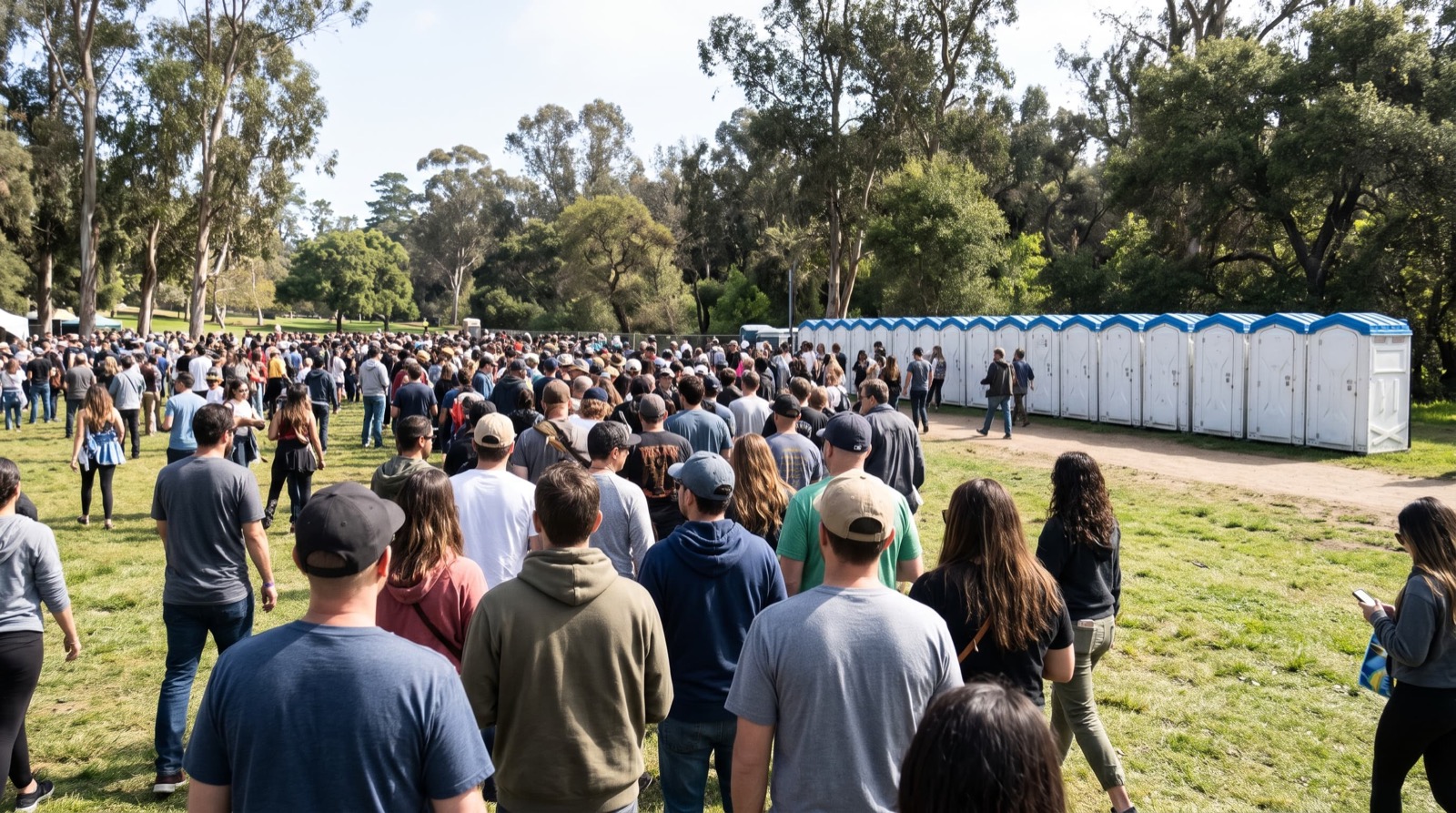
Start with the busiest moment, not the guest list
A guest list tells you how many people were invited. Restroom demand depends on how many are on site together and when they all decide to go. A farmers market with 2,000 visitors drifting through over eight hours creates a gentle, steady load. A 150-person vineyard ceremony that breaks for cocktails at the same minute creates a spike, and the line that forms in that spike is what guests remember.
The four inputs that move the number
- Peak headcount. The most people you expect on the grounds at one time.
- Length of the event. Longer events mean more visits per person, even if the crowd never grows.
- Alcohol. Beer gardens, wine tastings and open bars raise usage noticeably. Wine-country weddings and brewery events are classic examples.
- Food. A sit-down meal tends to send people to the restroom in waves, and food service raises the importance of handwashing.
A rule of thumb you can check against
A widely used starting point is about one portable toilet for every 50 guests at an event of roughly four hours. From there, planners scale up. Our rental calculator uses the following logic: no change up to four hours, about 25 percent more for events up to eight hours, about 50 percent more beyond that, then an extra 25 percent if alcohol is served and 10 percent more if there is a meal. For handwashing, a common guide is roughly one handwashing station for every four toilets, with at least one near any food area.
Treat the output as a planning estimate. Your venue, permit or local fire and health requirements may ask for more, and nothing here is a legal minimum.
Worked examples
- School fun run, 400 people, three hours, no alcohol, snacks only. Close to the base ratio, so around eight toilets, plus accessible units and a couple of handwashing stations at the finish area.
- Backyard wedding, 120 guests, seven hours, alcohol and dinner. The multipliers stack, so the answer comes out well above the base figure of about two or three units. See our wedding restroom guide for how to place them.
- Two-day street fair. Plan per day, not for the weekend, and think about servicing between days. The festival page covers multi-day logistics.
Do not forget the add-ons
- Accessible units. Public events should plan at least one, placed on a firm, level route. Read our accessible restroom planning guide.
- Separate staff and vendor units. Vendors and crew can otherwise eat into guest capacity.
- A margin. If one unit is out of use, you still want the line to stay short.
Where you put them matters
Two clusters of four units near the activity beat one bank of eight at the far edge of the property. Spread units across entrances, food and the main gathering area, keep walkways clear for lines, and make sure the route is lit if the event runs after sunset.
Construction and work sites are different
Job sites are sized by crew size and regulation, not by guest ratios. See the Cal/OSHA construction sanitation guide.
Have your headcount, hours and venue ready and call for a quote. We will review the numbers with you.
Last updated October 14, 2026. This guide is general information, not legal, engineering or regulatory advice.